 Structure Fire in NE Bend Mobile Home Park 10/25/26 (Photo)
Bend Fire & Rescue - 10/26/26 11:35 AM
Bend Fire & Rescue crews responded at 8:58 p.m. Sunday, Oct. 25, after a resident called 911 to report a fire in their home at Rock Arbor Villa Mobile Home Park off Northeast Purcell Boulevard in northeast Bend.
Firefighters arrived to find a mobile home engulfed in flames that extended to the roof. Crews knocked down the fire within minutes and prevented it from spreading to other homes.
Smoke alarms alerted the home’s sole resident, who was able to safely evacuate. Two cats died in the fire. The estimated loss to the home and its contents was $50,000. The Red Cross was called to assist the resident with housing and resources.
Investigators determined that the fire started behind a wall where the fireplace flue was improperly connected. When a fire was lit in the fireplace, heat and flames entered the wall and ignited a fire.
Bend Fire & Rescue reminds residents that working smoke alarms save lives. Test your alarms to make sure they work. Learn more at bendoregon.gov/alarm-info.
Also remember to have stoves and furnaces serviced and inspected before using them for the season. Hot exhaust can enter walls through loose connections. Debris can accumulate in the flue during months without use. Regular cleaning and maintenance also help prevent fires caused by creosote or ash buildup.
[email protected], 541-322-6386
Alternate Contact: Makayla Oliver, Communications Manager
[email protected], 541-797-3584
Bend Fire & Rescue - 10/22/26 1:11 PM
At 12:51 a.m., Bend Fire & Rescue crews were called to reports of a structure fire at Black Bear Diner, located at the corner of Third Street and NE Olney Avenue in Bend.
Firefighters arrived to find flames reaching 15 to 20 feet above the roof. Crews extinguished the fire within minutes of arriving at the scene.
The fire was determined to have started when a faulty safety switch on the stove failed to shut off the gas as intended. The fire spread from the stove into the wall behind it and then into the attic. The diner sustained water and smoke damage throughout the restaurant. Damage to the structure and contents is estimated at approximately $250,000.
Firefighters credit the diner’s hood suppression system with minimizing damage to the structure. Bend Fire & Rescue inspectors inspected the system two weeks earlier, and the system activated successfully during the fire. A commercial kitchen hood suppression system is a specialized fire protection system designed to detect and extinguish grease, oil and open-flame fires within seconds. Businesses required to have hood suppression systems must have them inspected annually to ensure they are in working order.
Bend Fire & Rescue would like to thank the Bend Police Department for its support during the call. The fire was first reported by an on-duty Bend Police Department officer who noticed flames coming from the roof of the diner. Officers forced entry into the building and confirmed it was unoccupied before assisting incoming crews with traffic control around the scene.
[email protected], 541-385-6679
Makayla Oliver, Communications Manager, Bend Fire & Rescue
[email protected], 541-797-3584
Attached Media Files: Stovetop Ignition Area , Bend Fire Ladder Truck Crew Ventilating Diner Roof , Diner Kitchen and Attic Damage
Bureau of Land Management Ore. & Wash. - 10/23/26 11:08 AM
When: Sunday, October 24, 7 a.m. to 4 p.m. PT
Where: BLM Bat Week webpage
Who: Ryan GosWING, an Oregon pallid bat
MEDFORD, Ore. – It's bat-ck! The Bureau of Land Management is hosting its annual Bat Beauty Contest with a brand new group of stunning contestants.
On Sunday, Oct. 24, Oregon’s own Ryan GosWING will go head-to-head with Dolly BATton, Miss Montana, in the first round. Visit the BLM’s webpage to learn more about Bat Week and vote for Ryan GosWING.
If he makes it through the first round, he’ll represent the Pacific Northwest in the Final Four on Wednesday, Oct. 28. Oregon bats have taken home the crown in the last three contests! Most recently, Hoary Potter was named the winner.
Help us take home a four-peat by voting for this year's Oregon bat when the contest begins on Oct. 24. Make sure you're following Bureau of Land Management so you don't miss your chance to vote!
See the attached media advisory from the BLM for more details.
-BLM-
The BLM manages about 245 million acres of public land located primarily in 12 western states, including Alaska, on behalf of the American people. The BLM also administers 700 million acres of sub-surface mineral estate throughout the nation. Our mission is to sustain the health, diversity, and productivity of America’s public lands for the use and enjoyment of present and future generations.
Bureau of Land Management Ore. & Wash. - 10/21/26 9:49 AM
BAKER CITY, Ore. – The Bureau of Land Management is considering an operator’s plan to mine for gold across 820 acres of public land in Baker County. The BLM manages almost a third of the nation’s minerals, and gold mining is a critical piece of the administration’s effort to and build a more secure domestic supply chain.
“Gold has been an important part of Oregon’s mining history and economy,” said Mike Decker, acting Vale District Manager. “Oregon’s mineral resources are helping America build a more secure domestic supply chain.”
Over the next 20 years, the Reeds Gulch Mining Plan proses mining activity on about half of that land. Planned activities include exploration test pits, excavation pits and trenches, a processing site, and three settling and recycling ponds. Before mining is even complete, the operator would begin restoration work under the proposal. The operator would mine at individual sites, closing and reclaiming each site as mining work moves to the next area. Both mining and restoration work would occur concurrently throughout the proposed 20-year operation. The proposal does not include blasting for mining.
The BLM is accepting public comments on its environmental assessment of the Plan. The comment period closes Nov. 20, 2026. Project planning documents are available at the BLM National NEPA Register, where comments can be submitted through the “Participate Now” option (preferred). Comments may also be emailed to [email protected]">[email protected] or delivered to: BLM Baker Field Office, Attn. Reeds Gulch EA, 1550 Dewey Ave, Suite A, Baker City, OR 97814.
-BLM-
The BLM manages about 245 million acres of public land located primarily in 12 western states, including Alaska, on behalf of the American people. The BLM also administers 700 million acres of sub-surface mineral estate throughout the nation. Our mission is to sustain the health, diversity, and productivity of America’s public lands for the use and enjoyment of present and future genera
Ore. Dept. of Public Safety Standards and Training - 10/21/26 2:11 PM
DPSST LAW ENFORCEMENT OFFICER CERTIFICATION MAINTENANCE WORKGROUP MEETING SCHEDULED
Notice of Scheduled Meeting
The DPSST Law Enforcement Officer Certification Maintenance Workgroup will hold a meeting on Wednesday, October 28, 2026, at 2:00 p.m. in Conference Room A234 at the Department of Public Safety Standards and Training located at 4190 Aumsville Hwy SE, Salem, Oregon. For further information, please contact Jennifer Howald at [email protected] and (503) 551-3258.
The meeting will be recorded and posted on the DPSST YouTube page after the meeting: https://www.youtube.com/@DPSST
Agenda Items:
1. Introductions
2. Review and Discuss:
- Ethics Training
- Mental Health or Crisis Intervention Training
- Firearms or Use of Force Training
- Consideration of Additional Training Topics
- Leadership Training
3. Next Workgroup Meeting: Wednesday, December 9, 2026, at 2:00 p.m.
Administrative Announcement
This is a public meeting, subject to the public meeting law and it will be recorded. Deliberation of issues will only be conducted by Telecommunications Curriculum Advisory Committee members unless permitted by the Chair. Individuals who engage in disruptive behavior that impedes official business will be asked to stop being disruptive or leave the meeting. Additional measures may be taken to have disruptive individuals removed if their continued presence poses a safety risk to the other persons in the room or makes it impossible to continue the meeting.
DPSST provides reasonable accommodations to ensure equal access for people with disabilities and those with limited English proficiency. To request a sign language interpreter, translation services, or other accommodations, please contact Juan Lopez at (503) 551-3167 or at [email protected]">[email protected], at least 48 hours before the meeting.
DPSST proporciona acomodaciones rasonables para asegurar el acceso igual para personas con descapacidades y para personas con competencia limitada de inglés. Para pedir un interprete de lengua de señas, servicios de traducción, u otras acomodaciones, por favor de contactar a Juan Lopez marcando al (503) 551-3167, o a [email protected]">[email protected], al menos 48 horas antes de la reunión.
Department of Public Safety Standards and Training
Phone: 503-551-3167
E-Mail: [email protected]
Oregon Department of Emergency Management (OEM) - 10/22/26 2:29 PM
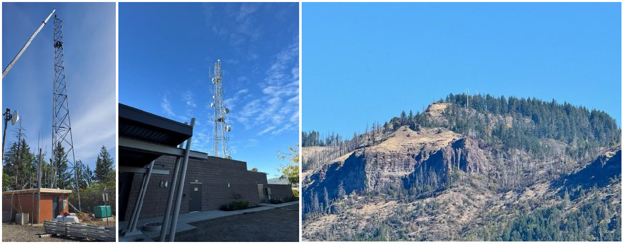
SALEM, Ore. — The Oregon Department of Emergency Management (OEM) wants to congratulate the Emergency Communications of Southern Oregon (ECSO 911)’s October 6 launch of the new countywide public safety radio system. ECSO 911 is the primary 911 center for Jackson County and Crater Lake National Park.
The new system strengthens radio communications between dispatchers and first responders across Jackson County and portions of Curry, Douglas, Klamath, Josephine, and Siskiyou (California) counties. The upgrade affects internal public safety radio communications and does not impact the ability of residents to call or text 911.
OEM’s statewide interoperability and preparedness teams partnered with ECSO 911, Jackson County and state and federal agencies to help support system planning and ensure compatibility with existing and future emergency communications infrastructure. The team supported technical coordination, grant alignment and statewide interoperability planning in coordination with the State Interoperability Executive Council, as the scope of the project grew to incorporate new technologies and improve redundancy.
“Interoperable, reliable communications save lives,” OEM’s Statewide Interoperability and Coordinator Jon Lee said. “Our interoperability and preparedness teams are proud to support this major upgrade, which strengthens Oregon’s emergency communications network and improves the safety of responders and the communities they serve.”
Project milestones include:
- A 2014 Department of Homeland Security grant awarded to Jackson County Fire District 3 to study public safety radio infrastructure.
- A 2016 conceptual design process that identified the P25 hybrid solution.
- Jackson County voters’ approval of a $28 million general obligation bond in 2019.
- A 2020 contract with Motorola Solutions and construction of 20 new or upgraded radio sites, including solar‑powered remote locations, completed in 2025.
- Deployment of about 1,700 to 1,800 radios to user agencies and extensive testing leading to the October 6 system cutover.
The project received additional support from the Oregon Legislature, the State Interoperability Executive Council, federal grant programs, the Oregon Department of Transportation, Oregon State Police and local public safety agencies.
OEM commends ECSO 911, Jackson County, partner agencies and local leaders for their collaboration and commitment to expanding and modernizing emergency communications in southern Oregon. Ongoing coordination among OEM, ECSO 911, fire and law enforcement agencies, and county service departments will help ensure a smooth transition and continued optimization of system performance.
The new system delivers real‑time, interoperable radio communications that enhance daily operations, mutual aid responses and multi‑agency coordination across both urban and remote areas.
It is the mission of the Oregon Department of Emergency Management (OEM) to lead collaborative, statewide efforts to support Oregon’s communities before, during and after emergencies, with a vision to create a ready and resilient Oregon. OEM prioritizes an equitable and inclusive culture of preparedness that empowers all Oregonians to thrive in times in crisis. For more information about OEM, visit oregon.gov/oem. You can get this document in other languages, large print, braille, or a format you prefer. For assistance, email [email protected]. We accept all relay calls, or you can dial 711.
Oregon Dept. of Forestry - 10/26/26 3:04 PM
Note: Oregon Department of Corrections sent out a media invite last week. This is the same event reminder.
News media is invited to attend:
What: The Oregon Department of Corrections (DOC) and Oregon Department of Forestry will jointly hold a 75th Anniversary Celebration of South Fork Forest Camp (SFFC) Oct. 29 from 11 a.m.-2 p.m. (NOT open to the public, by invite only.)
Over the last 75 years adults in custody (AICs) at SFFC have done great work in the Tillamook State Forest and beyond including:
- Planted more than 60 million seedlings
- Deployed to fight more than 1,000 wildfires with 150,000 workdays on those fires
- Maintained, made, or worked to improve 15 million feet of recreational trails
- Brushed 6,000 plus miles of forest roads
- Installed tree protection on 6.5 million trees (to keep wildlife from eating them)
- Felled more than 500,000 snags (dead, potentially hazardous trees)
- Constructed, cleaned up and supported an uncounted/tracked number of state forests REI (Recreation, Interpretation and Education) facilities
- Put in more than 1 million worker days on all their contributions over the last 75 years
Not only has all the AIC’s work been a big benefit to the public, but the positive social behavior modeling, training, job skills, and education they received while assigned to SFFC has set them up for success after incarceration.
Visuals: Talk with AICs at tables set up in an open house style about their work at SFFC. Take a tour of the ODF workshops where AICs are trained and work (wood, metal, firefighting, small engine repair/maintenance, and tool repair/maintenance. See DOC and ODF leadership outline the contributions over the last 75 years during the ceremony.
People on-site available to interview: DOC and ODF department leaders, present and past SFFC staff and various AICs at the tables.
When: Oct. 29
Where: South Fork Forest Camp in the Tillamook State Forest. 48300 Wilson River Hwy, Tillamook, OR 97141-9799. It’s about 1.5 miles up a gravel road after the turnoff from the highway. The ceremony will be in the big white tents.
Time: Meet at 10:45, ceremony begin at 11 a.m.
Please send an RSVP by Oct. 27. RSVP to [email protected] and/or [email protected]">[email protected] . (Note: Likely cells phone will not have coverage at South Fork.)
Special note: All AICs have signed photo releases some will be available to talk with and interview.
Background:
Oregon Department of Forestry : Adults in custody rehabilitation : Forest benefits : State of Oregon
Department of Corrections : Locations and Divisions : About Us : State of Oregon
Oregon Dept. of Forestry - 10/22/26 4:14 PM
SALEM, Ore. — The Regional Forest Practice Committee for northwest Oregon will meet at 11:30 a.m. on Thursday, Oct. 29 in the Santiam Room, Building D, ODF Headquarters, 2600 State Street, Salem. To join virtually, please use the Teams video conference information found on the agenda. To provide public comment, please email [email protected]">[email protected].
The committee’s agenda includes:
- Division and field updates
- Operator of the Year
- Workplan development
- Technical guidance development
- Compliance monitoring update
- Forest Practices Act training update
The public may attend in-person or online via Teams. Public comments will be accepted. Accommodations for people with disabilities, and special materials, services, or assistance can be arranged by calling at least 48 hours in advance of the meeting at 503-945-7200 or by email at [email protected]">[email protected].
Regional Forest Practices Committees are panels of citizens – mandated under Oregon law – that advise the Oregon Board of Forestry and may assist the Board of Forestry in developing appropriate forest practice rules. The committees are comprised of citizens qualified by education or experience in natural resource management. In 1971, the legislature enacted Oregon’s Forest Practices Act which includes three Regional Forest Practices Committees, serving the Eastern, Northwest, and Southwest regions of the state. Under Oregon law, a majority of the committees’ members must be private forest landowners and logging or forest operations companies.
Oregon’s forests are among the state’s most valued resources, providing a balanced mix of environmental, economic, and social benefits. View more information on the RFPC webpage.
Oregon Dept. of Forestry - 10/22/26 10:29 AM
SALEM, Ore. — The Compliance Monitoring Program Committee will hold a virtual meeting Thursday, Oct. 29, from 9 to 10:30 a.m. To join virtually, please use the Teams video conference information found on the agenda.
The committee’s agenda includes:
- Leadership and staffing updates
- CMP progress and future work
- Roads and steep slopes pilot study updates
The meeting is open to the public to attend online via Teams. Requests for an interpreter for the hearing impaired or other accommodations for persons with disabilities should be made at least 48 hours before the meeting by emailing [email protected]">Marta Frias-Bedolla.
The CMP Committee assists in efforts to monitor compliance with Forest Practices Rules. The committee advises ODF regarding monitoring projects and procedures. View more information on the CMPC webpage.
Oregon Dept. of Human Services - 10/23/26 11:42 AM
(Salem, Ore.) ― The Oregon Department of Human Services Office of Developmental Disabilities Services (ODDS) seeks public comment on the following Medicaid waivers:
- 1915 (c) Children’s Extraordinary Needs (CEN) Waiver
- 1915 (b) (4) Fee-for-Service Selective Contracting Program
Summary of substantial updates
Increase the number of children served in the CEN waiver
Originally, the 1915 (c) CEN Waiver could serve 155 children at one time. We’re increasing the number of children that can be in the CEN program to 230 children at a time. This helps us plan for children entering and leaving the program during the year. We’re also increasing the total number of children who can be in the CEN program during a one-year period from 171 to 280. We’re asking the Centers for Medicare and Medicaid Services (CMS) to approve this change retroactively to July 1, 2026.
Context for the proposed change: The CEN program started July 1, 2024. The Oregon Legislature gave the program a limited budget. At that time, we estimated that the program’s budget could support 155 children at a time. About 15 months after the program began, we had enough data to begin analyzing the program’s service usage. The average cost per child was lower than expected. Since then, the data continues to affirm this finding. That’s why we can expand the program to serve more children within its budget. The federal government doesn’t consider this a big change, so we can ask for a retroactive start date to July 1, 2026, which is when we expanded enrollment for the program.
Updated cost projections for CEN case management services
The 1915 (b) (4) Fee-for-Service Selective Contracting Program allows ODDS to specify the number and type of case management entities that are allowed to provide waiver case management services. Cost projections for CEN case management are included in this waiver. We are updating these projections to account for the increase in the number of children served in the CEN waiver. ODDS is asking CMS for a retroactive approval date of July 1, 2026.
How to submit feedback on the proposed changes
- Send an email to [email protected]">[email protected].
- Send written comments to ODDS Medicaid waiver/State Plan analyst, 500 Summer Street NE E-09, Salem, OR 97301.
The deadline for comments is Nov. 25, 2026. We must receive comments by this date.
More information
Read the drafted waivers and the community notice announcing these updates on the ODHS website.
Print versions of the updates are posted in local community developmental disabilities programs and support services brokerages.
To ask for a printed version, contact ODDS Medicaid Waiver/State Plan Analyst at 503-507-2083 or [email protected]">[email protected].
You can get this document for free in other languages, large print, braille or a format you need. Email [email protected]">[email protected] or call 503-945-5811. We accept all relay calls.
Attached Media Files: odds-2026-10-23-media-release-cen-waiver-en.pdf , odds-2026-10-23-media-release-cen-waiver-es.pdf
Oregon Dept. of Human Services - 10/22/26 1:40 PM
(Salem) — Medicare beneficiaries who would like to discuss plan options can receive free, confidential help from the Oregon Department of Human Services (ODHS) during Open Enrollment. Help includes comparing and selecting Medicare plans, reviewing their current coverage and assistance with making changes for the upcoming year.
Medicare Open Enrollment for 2027 plans began Oct. 15 and will remain open through Dec. 7, 2026.
The Senior Health Insurance Benefits Assistance (SHIBA) program provides free help from certified counselors who can help people understand their benefits and make informed decisions about their Medicare options.
During the Open Enrollment period, people with Medicare can:
- Switch from Original Medicare to a Medicare Advantage Plan,
- Switch from a Medicare Advantage Plan to Original Medicare,
- Change their Medicare Advantage Plan,
- Change or enroll in a Part D prescription drug plan, and
- Review changes in costs, coverage and provider networks.
SHIBA is one of several programs within the ODHS Office of Aging and People with Disabilities that provides services to older adults in Oregon regardless of their income. The information SHIBA provides not only supports older adults as they make decisions, but can help them recognize Medicare scams during Open Enrollment.
“Navigating Medicare coverage is complex and Oregonians should not have to navigate Medicare alone,” said APD Director Nakeshia Knight, Ph.D. “Our goal is to make that process easy, accessible, and free.”
Even if someone is happy with their current plan, a quick comparison can reveal better options. SHIBA certified counselors can help Oregonians compare plans and explain programs that can save them money on Medicare costs. Counselors can help beneficiaries avoid late-enrollment penalties and unexpected out-of-pocket charges, review annual plan changes, and ensure their prescriptions and preferred providers remain covered. Some Medicare beneficiaries may also qualify for cost-saving programs such as Medicare Savings Programs or Extra Help.
SHIBA reports scams to Medicare in addition to educating people on how to avoid Medicare scams or fraud. Common scams include claiming beneficiaries need a new card or offers of free medical equipment. These scams can happen by mail, over the phone, or by text and email. The best way to avoid Medicare scams is to keep Medicare numbers private; anyone who receives a message or email about Medicare from a number or person they do not recognize should not respond.
How to get free help
Help from SHIBA is available over the phone and through virtual and in-person appointments. To talk to a SHIBA certified counselor or to make an appointment, call SHIBA at 800-722-4134 (toll-free.)
Because high call volume during Open Enrollment may result in longer than usual wait times, Oregonians are also encouraged to access free resources on the SHIBA website at SHIBA.oregon.gov.
Online resources include:
- The 2027 Oregon Guide to Medicare Insurance Plans, which is available on the SHIBA website and will be translated to multiple languages in the coming weeks.
- Medicare frequently asked questions,
- An agent locator tool and
- A list of free virtual and in-person Medicare presentations
People who need Medicare help in a language other than English, including sign language, can call 833-685-0841 or send an email to [email protected]; after placing a request, a translator will reach out in the requestor’s preferred language to provide assistance in communicating with SHIBA.
About the Senior Health Insurance Benefits Assistance program
The Senior Health Insurance Benefits Assistance (SHIBA) program is part of the ODHS Office of Aging and People with Disabilities. It is a statewide network of certified counselors volunteering in their community to help all Oregonians make educated Medicare decisions. SHIBA offers free, objective, confidential and local one-on-one health insurance counseling and assistance to people with Medicare and their families.
This project is supported by the Administration for Community Living (ACL), U.S. Department of Health and Human Services (HHS) as part of a financial assistance award totaling $1,476,444 with 100 percent funding by ACL/HHS. The contents are those of the author(s) and do not necessarily represent the official views of, nor an endorsement, by ACL/HHS, or the U.S. Government.
Oregon Dept. of Revenue - 10/22/26 8:55 AM
(Salem, OR)—Oregon and the Internal Revenue Service (IRS) are once again recruiting people to assist in the free preparation of taxes as part of the Volunteer Income Tax Assistance (VITA) or Tax Counseling for the Elderly (TCE) programs, and the Department of Revenue’s Taxpayer Advocate is encouraging Oregonians to volunteer.
“Too often those tax credits go unclaimed,” said Codi Trudell, Oregon’s Taxpayer Advocate. “The cost and complexity of filing a tax return is a hurdle for too many people.
“Oregon needs more VITA sites and volunteers. By volunteering to help them file their returns and claim their credits, Oregonians can make a difference for people in their local community.”
Volunteers don’t need to be tax experts. Training is provided by the IRS.
In addition to the need for volunteers, the IRS is also seeking organizations to sponsor VITA and TCE clinics.
Each tax season, the Oregon Taxpayer Advocate Office offers an interactive map of free tax assistance sites in Oregon on the Department of Revenue website. The VITA sites are represented as blue dots on the map.
“Each blue dot represents an organization that has volunteered to make tax assistance available to the people in their community who need it,” Trudell said. “More volunteers will mean more blue dots and more opportunities for Oregonians to get the tax preparation assistance they need.”
The VITA and TCE programs include training in a variety of roles, including providing free tax help for low-to-moderate income families who need assistance preparing their tax returns. Across the country, thousands of people volunteer each year and prepare millions of tax returns at thousands of tax sites nationwide.
Volunteers are assigned to work with a sponsoring organization, first to receive training and then to begin volunteering at a location in the community. Training is offered both online and in the classroom. Tax sites are generally open nights and weekends, and the hours are flexible.
Additional information is available on the IRS website. Interested persons can submit an inquiry now using the VITA/TCE Volunteer and Partner Sign Up form moving them one step closer to becoming a VITA or TCE tax volunteer and giving back to their community. The IRS will share information about those interested in volunteering with sponsoring organizations for follow-up contact.
Organizations with an interest in partnering with the IRS to sponsor or host a free tax preparation site in Oregon can also complete and submit the VITA/TCE Volunteer and Partner Sign Up form.
To find a local VITA site, taxpayers can use the IRS Site Locator tool or check the Oregon Department of Revenue’s Free Tax Help map with VITA sites marked in blue.
Oregon Employment Department - 10/23/26 1:41 PM


For immediate release: October 23, 2026
Media Contact: [email protected]
Oregon Employment Department celebrates National Disability Employment Awareness Month
Salem, Ore. — The Oregon Employment Department (OED) is celebrating National Disability Employment Awareness Month (NDEAM) this October by highlighting how people with disabilities contribute to Oregon’s workforce and how employers can draw from this talented pool of individuals.
This year’s theme, “Celebrating Value and Talent,” recognizes the skills and contributions people with disabilities bring to workplaces, communities, and the economy.
WorkSource Oregon — a statewide partnership that includes OED’s Workforce Operations division — provides services to help job seekers with disabilities find jobs that match their skills and interests. WorkSource Oregon can also support employers in matching skilled people with disabilities with their specific job openings.
Job seekers, including those with disabilities, can meet one-on-one with staff to identify employment goals and develop a plan for their job search. Staff can help with resumes, applications, and interviews and connect job seekers with employers and job opportunities. Customers can also explore career options, training, and other resources that can help them prepare for and succeed in a new job.
“Oregon’s workforce is stronger when people have opportunities to use their skills, build careers, and contribute to their communities,” said OED Director Andrew R. Stolfi. “We’re honored to help job seekers with disabilities connect with opportunities to thrive in the workplace, and with partner agencies for added support.”
WorkSource Oregon partners include the Oregon Department of Human Services’ Vocational Rehabilitation program, the Oregon Commission for the Blind, and other workforce partners that provide individuals with disabilities with specialized employment services and supports. Vocational Rehabilitation helps remove possible barriers to employment, and the Oregon Commission for the Blind provides job search assistance, skills training, and workplace support for eligible Oregonians who are blind.
These WSO partnerships help job seekers identify career goals, build skills, and connect with employment opportunities. They also allow customers to access different types of support through Oregon’s broader workforce system as they move toward employment.
WorkSource Oregon also works with businesses that want to recruit and retain workers with disabilities. Staff can help employers reach potential candidates and connect with workforce resources. These partnerships can help businesses expand their talent pool while creating more opportunities for job seekers.
“Every job seeker brings different skills, experiences, and goals to their job search,” said Workforce Operations Director Jim Pfarrer. “We help job seekers with disabilities explore career opportunities, prepare for employment and connect with employers. We also work with our partners to make sure people can access the services and support they need to succeed.”
WorkSource Oregon staff can help employers who want to use National Disability Employment Awareness Month as an opportunity to explore how they can improve their recruitment, hiring and retention practices to expand opportunities for workers with disabilities. Disability can be apparent or non-apparent, and every worker brings different strengths, experiences, and perspectives to the workplace.
Job seekers and businesses can learn more about free WorkSource Oregon services and find their nearest WorkSource Oregon center at WorkSourceOregon.org.
People who need an accommodation or help accessing WorkSource Oregon services can also contact their local WorkSource Oregon center for help.
About Workforce Operations and WorkSource Oregon
The Oregon Employment Department’s Workforce Operations division is a partner in WorkSource Oregon, a consortium of state agencies and local workforce boards, and operates 37 WorkSource Oregon centers across the state. WorkSource Oregon offers a wide range of free services to job seekers, employers, and businesses, including personalized career coaching, resume writing, job search strategies, support for job postings and hiring incentives, and access to labor-market data. Visit worksourceoregon.org for more information.
Need help?
WorkSource Oregon (WSO) is an equal opportunity agency. WSO provides free help so you can use our services. Some examples are sign language and spoken-language interpreters, written materials in other languages, large print, audio, and other formats. To get help, please call 503-947-1680. TTY users call 711. You can also send an email to [email protected]">[email protected].
WorkSource Oregon (WSO) es una agencia de igualdad de oportunidades. WSO proporciona ayuda gratuita para que usted pueda utilizar nuestros servicios. Algunos ejemplos son intérpretes de lengua de señas e idiomas hablados, materiales escritos en otros idiomas, letra grande, audio y otros formatos. Para obtener ayuda, por favor llame al 503-947-1680. Usuarios de TTY pueden llamar al 711. También puede enviar un correo electrónico a [email protected]">[email protected].
###
Oregon Health Authority - 10/26/26 3:39 PM
October 26, 2026
Media contact: Erica Heartquist, [email protected]
Breast cancer survivors emphasize early detection, community support
Two survivors share their experiences during Breast Cancer Awareness Month and encourage people to seek screening guidance and support
PORTLAND, Ore. – When Susan Stearns found a lump in her breast eight years ago, she scheduled a mammogram that day. Within weeks, she was diagnosed with breast cancer.
Today, as CEO of Pink Lemonade Project, Stearns draws on her experience to help others navigate diagnosis, treatment and life beyond cancer.
During Breast Cancer Awareness Month, Stearns and Brooks Fuentes, program associate for community support at Young Survival Coalition (YSC), are sharing their personal experiences to emphasize the importance of breast health, early detection and emotional support. “I found a lump in the shower in April of 2018 and panicked,” Stearns said. “I almost knew I had breast cancer, but I scheduled a mammogram that day rather than worrying about it and putting it off.”
Founded in Vancouver, Wash., 16 years ago, Pink Lemonade Project serves 42 counties across Oregon and southwest Washington. Its programs provide emotional, practical and financial support to people affected by breast cancer at every stage, including those living with metastatic disease.
“Breast cancer incidence rates are climbing for women under 40 —so before the screening age,” Stearns said. “We know that more younger women, and specifically people of color, are getting diagnosed with triple-negative breast cancer, which is a more complicated kind to treat. We know that people in rural communities are getting diagnosed at later stages and with a diagnosis are dying at higher rates than they are in urban areas.”
“The fact is one in seven women will be diagnosed in this region,” Stearns added, “so it’s more important than ever to educate people how to do a self-exam, when to start getting screened and why early detection can be lifesaving.”
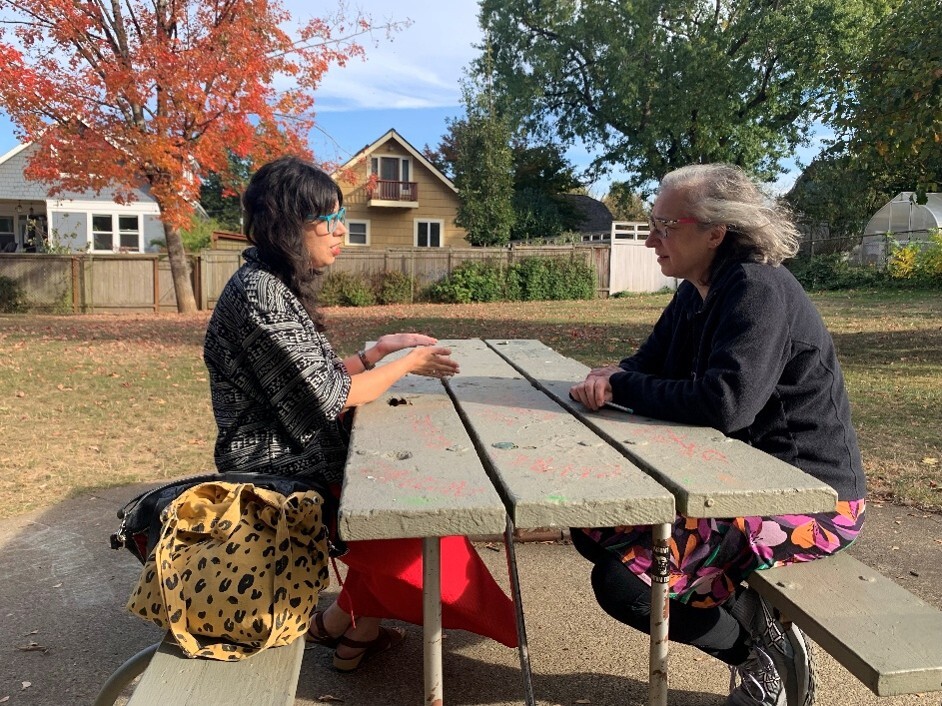
Brooks Fuentes (left) and Susan Stearns (right) have become friends through their shared experiences
Finding support through treatment
For Fuentes, a family history of breast cancer prompted her to get her first mammogram at age 36. Her mother had been diagnosed with metastatic breast cancer at 46 and later died from the disease.
“I saw my mom go through metastatic breast cancer and pass away and knew that that was just so important from the get-go,” Fuentes said. “I was diagnosed with cancer right then. I couldn't even feel it.”
Fuentes was diagnosed with stage 2 invasive ductal carcinoma. Her treatment included chemotherapy, lumpectomy, radiation and immunotherapy.
She turned to local organizations, including Pink Lemonade Project and Breast Friends, as well as YSC, to find others who understood what she was experiencing.
“And it really saved my life,” Fuentes said. “Just as a clinician will give you chemotherapy, you also need that psychosocial support. And I was able to find some of my best friends through these organizations.”
Now a five-year breast cancer survivor, Fuentes helps connect others with resources and community through her work at YSC. She understands how isolating a diagnosis can be, especially for younger adults who may struggle to find others facing similar experiences.
“When you're the youngest person in that cancer waiting room, you feel so isolated and alone,” she said. Fuentes encourages people to understand their individual risk and talk with a health care provider about appropriate screening, particularly if they have a family history of breast cancer or notice changes in their body. “I'm a five-year survivor and doing great. So, early detection and knowing your normal is essential,” she said.
“The really big message is that pink is not just a marketing tactic,” Stearns said. “We are literally talking about a preventable and screenable cancer, where, if caught early, there are more life-saving treatments than ever before.”
Both women’s experiences underscore an important message: know your body, understand your risk, and seek timely, regular screenings. It is crucial. And when breast cancer changes a person's life, compassionate support and connection is just as important as medical care, making a meaningful difference throughout the healing journey.
People affected by breast cancer, including family members and caregivers, can learn more about resources and support through these organizations:
- Oregon ScreenWise Program: ScreenWise
- Pink Lemonade Project: pinklemonadeproject.org
- Young Survival Coalition: youngsurvival.org
- Breast Friends: breastfriends.org
##
Oregon Health Authority - 10/22/26 3:06 PM
October 22, 2026
Media contact: Jonathan Modie, [email protected]
As climate hazards increase, Oregon communities fight back
OHA’s annual Climate and Health report shows extreme heat, wildfire smoke, drought are continuing burdens, but local projects are building resilience
PORTLAND, Ore.—Climate hazards are happening with more frequency in Oregon, with more days of extreme heat and wildfire smoke—and, in many areas, combinations of both—than 20 years ago, a new Oregon Health Authority (OHA) report shows.
But communities are fighting back with projects to mitigate the effects on human health, according to the OHA Public Health Division’s Climate and Health in Oregon report for 2025. These efforts are building resilience against worsening climate-related threats that can cause serious illnesses and death.
For example, Marion County is working with local partners to lower energy costs for older adults through home energy assessments and connect residents with contractors to install heat pumps and home weatherization. Jackson and Josephine counties and partners hosted a health fair in 2025 so more than 800 residents could learn about wildfire smoke risks and preparedness strategies.
“This year’s Climate and Health in Oregon report demonstrates that extreme climate effects continue to be a reality of our daily lives in Oregon,” said Public Health Division Director Naomi Adeline-Biggs. “We must continue supporting communities as they identify new, innovative, equitable approaches to adapting to these hazards and limiting health risks.”
Stark findings
Among the report’s starkest findings: between 2006 and 2025, the estimated number of days with extreme heat nearly doubled; wildfire smoke days tripled; and days with heat and smoke more than quadrupled. Rural counties in eastern, central and southern Oregon were hit hardest, racking up the highest number of extreme heat days, and rural southern and central counties with the highest total days with smoke.
However, wildfire smoke days increased fastest in Oregon’s biggest population centers. Even though Multnomah and Washington counties experience less smoke than other areas, the amount of wildfire‑related particulate matter in the air is now rising on average more quickly in these heavily populated areas than in other parts of the state.
In addition, the state experienced multiple drought periods, with widespread drought in 2015. In 2021, extreme drought affected half the state.
Damaging effects
The effects across Oregon have been damaging, the report shows.
From 2016 to 2025, hospital emergency departments saw spikes in visits for heat-related illnesses and smoke-related, non-infectious respiratory illnesses. Southern, central and eastern Oregon experienced some of the highest annual heat-related illness visit rates from 2016 to 2025. Although regions in western Oregon experienced lower annual heat related illness rates overall, all regions experienced increases during periods of extreme heat.
The report highlights impacts that extend beyond extreme heat and wildfires:
- Youth mental health: In 2025, results from the 2024 Oregon Student Health Survey showed 71% of Oregon 11th-graders reported experiencing stress about the future due to climate change, and 37% said these feelings negatively affected their lives.
- Harmful algae blooms: In 2025, OHA investigated 51 suspected harmful algae bloom events, issued 20 freshwater recreational use health advisories, and detected microcystin and saxitoxin levels that exceeded recreational use values.
- Mosquito-borne disease risk: In 2024 and 2025, routine mosquito surveillance identified Aedes aegypti in Jackson County, a mosquito species predominantly found in tropical and subtropical areas and the primary vector for diseases like dengue and Zika. This species of mosquito had not previously been detected in Oregon.
Communities are adapting
Like Marion, Jackson, and Josephine counties, agencies and organizations are finding new ways to help their communities adapt to climate change.
The Center for African Health and Education, a Portland-based, East African-led organization, used an OHA Public Health Equity grant to hold monthly workshops for the African refugee and immigrant communities on heat, air quality and wildfire smoke safety. It also created a messaging group so people could stay connected and get climate and health-related updates.
Latino Network, an organization focused on culturally specific practices and services, used a Public Health Equity grant to host its annual Conoce tu río, conoce tu comida: Know your river, know your food workshop. Participants exchanged cultural stories, learned about environmental health risks, and discussed ways to protect water and fishing tradition.
Carolina Hernandez, workforce development manager in Latino Network’s Department of Health and Wellness, said culturally specific climate adaptation is critical. “People share the stories of when they were in their counties of origin and how they went to the rivers, how they cook, how they spent days with the entire family sharing their lives and fishing ... We try to give space to the communities so they can do the same here.”
Another climate adaptation project involved OHA’s Youth Advisory Council, a group of 15- to 19-year-olds from across Oregon who provide input on health policies and initiatives related to well-being. Members of the council’s youth data subcommittee analyzed results from the 2024 Student Health Survey to find out how climate change is affecting youth.
Among the findings: stress arises from youth feeling climate change is out of their control and teaching lacks actionable steps or youth-led examples; Latinx, Middle Eastern, North African and Asian youth and those who identify as gender diverse or non-binary reported disproportionate mental health impacts of climate change; and students need mental health support from school counselors and other trusted adults who are knowledgeable about climate change.
“Students were saying the more you understand climate change, the more anxious or stressed you might feel,” said Andres Pineda, who attends Portland State University. “The issue is that students felt like there're not enough resources or different programs available to actually make a difference with climate change, to actually do something about it.”
Olivia Sun, a student at Jesuit High School in Beaverton, said the analysis shows youth are eager to help address climate hazards. “Just an opportunity for youth to be able to learn about it, an opportunity for youth to be able to feel like they're part of the solution,” she said, “would be great in resolving some of the anxiety and helplessness youth feel about climate change.”
Oregon and its partners are taking additional steps to adapt to climate threats. Investments in modernizing the state’s public health system help OHA, the Nine Federally Recognized Tribes of Oregon, local public health authorities and community-based organizations implement programs and policies focused on preparing and responding to more frequent and severe hazards.
Healthy Homes Grant Program funding helped local organizations make home upgrades that reduce health and safety risks, improve indoor conditions and create healthier living environments for low-income individuals and historically underserved communities.
For more information, visit www.healthoregon.org/climate.
Oregon Health Authority - 10/22/26 2:37 PM
October 22, 2026
Media contact: Jonathan Modie, [email protected]
OHA publishes final report on health risks from Crook County wells
PORTLAND, Ore.—Oregon Health Authority (OHA) has published its final report analyzing health risks related to drinking water from domestic wells near Prineville.
The Environmental Health Assessment Program in OHA’s Public Health Division today published its health consultation report following a two-month public comment period. The report found water in many of the nearly 60 domestic wells tested north of Prineville pose some level of health risk from contaminants—arsenic, nitrates and some coliform bacteria—common in Oregon wells.
In the report, OHA evaluated testing results for water samples and found about half of the wells had detectable levels of lead, which typically is from plumbing. About half also had manganese levels that can cause bad taste, discoloration, and cloudiness. Seven wells had manganese levels high enough to pose health risks to children under 1 year old, were they to drink it.
The report includes recommendations for households to mitigate risk and address well contamination, such as seeking blood lead testing, especially for children; treating their water; and verifying treatment effectiveness with additional testing.
OHA has shared well sampling results and health risk information with affected residents and offered one-on-one consultation with an OHA toxicologist.
The final report is unchanged from the public comment draft OHA released in June 2026, except for the inclusion in the appendix of five comments received during the comment period, along with OHA’s responses to the comments. All the comments were on topics outside the scope of OHA’s analysis and did not result in changes to the report.
OHA recognizes that access to safe drinking water is critical to the health of all people in Oregon. While the agency does not regulate the quality of private well water, it supports domestic well users by directing them to informational resources about well water testing, maintenance, and treatment, and health risks from contaminants.
The Crook County health consultation and supporting materials are on the OHA website at www.oregon.gov/crookcowells.
###
Oregon Health Authority - 10/21/26 3:44 PM
October 21, 2026
Media contact: Erica Heartquist, [email protected]
Recreational use advisory downgraded to a precaution for Cullaby Lake
Pet owners should continue to keep their pets away from areas that appear to have a bloom
PORTLAND, Ore. – Oregon Health Authority (OHA) has downgraded the recreational use health advisory to a precaution for Cullaby Lake.
OHA issued the advisory Sept. 17.
Water monitoring has confirmed that the level of cyanotoxins in Cullaby Lake are below recreational guideline values for people. However, levels detected are still above OHA’s educational guideline values for dogs, and owners should keep their pets away from areas with blooms.
OHA advises recreational visitors to continually be alert to signs of cyanobacteria blooms. This is because blooms can develop and disappear on any water body at any time when bloom conditions are favorable. Only a fraction of water bodies in Oregon are monitored for blooms and toxins, so it’s important for people to become familiar with the signs of a bloom, and exposure routes and symptoms by visiting OHA’s Cyanobacteria (Harmful Algae) Blooms website at http://www.healthoregon.org/hab.
When recreating, people, and especially small children, and pets should avoid areas where the water is foamy, scummy, thick like paint, pea-green or blue-green, or if thick brownish-red mats are visible or bright green clumps are suspended in the water. If you see these signs, avoid activities such as swimming or motorized or non-motorized boating activities that cause you to swallow water or inhale droplets, and keep pets out of the area.
Cyanotoxins can still exist in clear water. When a bloom dies, toxins released may reach into clear water around the bloom. Blooms can be pushed into other areas, leaving toxins behind. There also are species of cyanobacteria that anchor themselves at the bottom of a water body, live in the sediment, or can grow on aquatic plants and release toxins into clear water.
For health information or to report an illness, contact OHA at 971-673-0482, or visit OHA’s Cyanobacteria (Harmful Algae) Blooms website.
###
Oregon Housing and Community Services - 10/26/26 1:56 PM
Renovations at Rose Schnitzer Tower preserve affordable housing while improving safety, accessibility, and quality of life for residents
SALEM, Ore. — Oregon Housing and Community Services (OHCS) joined Guardian Real Estate Services, Robinson Jewish Home, and other community partners earlier this month to celebrate the grand reopening of Rose Schnitzer Tower, marking a major investment in preserving 233 affordable homes for adults in downtown Portland.
Rose Schnitzer Tower provides 233 one-bedroom apartments for older adults earning at or below 60% of the area median income. Preserving these homes will ensure affordability while delivering essential improvements that enhance residents’ safety, comfort, and quality of life.
“Day by day, community by community, we are working to build a more affordable future for Oregonians,” said OHCS Executive Director Andrea Bell. “This progress means long term affordability and a home that delivers the dignity Oregonians deserve.”
OHCS supported the preservation project with $21.2 million in Low-Income Housing Tax Credits and $38 million in conduit bonds. These investments helped finance extensive renovations to the building’s interior and exterior, including upgrades to improve safety, accessibility, and energy efficiency.
Improvements include modernized bathrooms, upgraded heating and cooling systems, new hot water boilers, and other essential building enhancements designed to extend the property’s lifespan and provide a more comfortable living environment for residents.
About Oregon Housing and Community Services (OHCS)
OHCS is Oregon's housing finance agency. The state agency provides financial and program support to create and preserve opportunities for quality, affordable housing for Oregonians with low and moderate incomes. OHCS administers programs that provide housing stabilization. OHCS delivers these programs primarily through grants, contracts, and loan agreements with local partners and community-based providers. For more information, please visit: oregon.gov/ohcs.
[email protected]
Oregon Parks and Recreation Dept. - 10/21/26 9:49 AM
Salem, Ore. — The Oregon Parks and Recreation Department’s All-Terrain Vehicle (ATV) Advisory Committee will meet Nov. 4 to review online and hands-on training stats, incident reporting, legislative updates and other ATV Program updates.
This will be a hybrid meeting with options to attend in person or via Zoom webinar – details below. The public can join as attendees. In the event that an in-person meeting is no longer feasible, the meeting will just be held on Zoom.
The ATV Advisory Committee meeting will begin at 9 a.m. The agenda and schedule are posted online.
Meeting details
Join in person
Best Western Mill Creek Inn
3125 Ryan Dr SE,
Salem, OR 97301
Join virtually via Zoom
Webinar ID: 844 9135 5047
Passcode: 120548
Join via audio only: 253-215-8782
Special accommodations may be arranged up to 72 hours in advance to improve accessibility by emailing [email protected].
The ATV Grant Program provides funding statewide for ATV recreation. Grant funds come from ATV user permit sales and a percentage of gasoline tax money. Read more about the state ATV program.
Oregon State Marine Board - 10/22/26 3:52 PM
The Oregon State Marine Board will hold its quarterly board meeting beginning at 8:30 am on October 29 at the Bandon Public Library in the Sprague Room, located at 1204 11th St. SW. On October 28, the Board will hold a Work Session at 1 pm at the Bandon Community Center, 1200 11th St. SW. The Marine Board will discuss advancing boating technology during the work session.
Local recreational boaters are encouraged to attend the Work Session on the 28th and the Board meeting on the 29th; however, public comment will only be accepted at the beginning of the Board meeting and not the work session.
The following items are on the agenda:
- Director’s Report
- Free Waterway Access Days; informational
- NGO Outreach Programs and Grant Funding Update; informational
- Mini-Jet Boat Update; informational
- Wind Sport Regulations; informational
- Life Jacket Rulemaking; Board Vote
- Snake River Reciprocity for Outfitter Guides Rulemaking; Board vote
Public comments will be accepted in writing or during the meeting’s public comment period before the agenda items. To provide oral testimony, register by 5 p.m. on October 27, with Jennifer Cooper at [email protected]">[email protected] or by mail: Oregon State Marine Board, Attn: Jennifer Cooper, 435 Commercial St. NE, Suite 400, Salem, OR 97301.
Meeting materials and live stream link are available on the agency’s Public Meetings page.
Marine Board meetings use the Microsoft Teams application, and viewing may require installing the free Teams app.
Visit Boat.Oregon.gov to learn more about the Marine Board, Oregon’s recreational boating agency.
-End-
Public Information Officer
Oregon State Marine Board
971-707-2396
[email protected]
U.S. Attorney's Office - District of Oregon - 10/26/26 3:40 PM
PORTLAND, Ore.— The U.S. Attorney’s Office for the District of Oregon announced today the completion of a coordinated, five‑week federal law enforcement operation targeting firearms and narcotics trafficking in the Portland metro area.
From August to September 2026, the U.S. Attorney’s Office and the Bureau of Alcohol, Tobacco, Firearms and Explosives (ATF)—working with the Drug Enforcement Administration (DEA) and federal local law enforcement partners—conducted an enforcement operation in the Portland metro area targeting narcotics and firearms trafficking. Using data to identify high‑risk locations, agents carried out investigative work, resulting in the seizure of 97 firearms and a significant quantity of illicit drugs, including methamphetamine, cocaine, crack cocaine, and fentanyl.
Seventeen individuals have been arrested to date:
Steven Hatcher
Aaron Stauffera
Manuel Bernal
Jay Williams Gimbal Reynolds
Oscar Yanez
Anthony Connelly
Jeanni Crane
Francisco Claudillo-Dimas
Kenneth Hamilton
Makayla Williams
Gus Wayne
Ryan Grant
Carlos Ruiz-Perez
Melanee Bybee
Michael Hoeft
Kristy Roberts
Thomas Dingus
“Every gun seized is a life saved. Every gram seized is a life saved. This operation sends a clear message: if you traffic illegal guns or deadly narcotics in our communities, you will be held accountable,” said Scott Bradford, U.S. Attorney for the District of Oregon. “By working closely with our federal and local partners, we removed dangerous firearms and destructive drugs from our streets and put a stop to criminal activity that threatens the safety of every Oregonian. We will continue using every tool available to protect our neighborhoods and ensure those who endanger our community face justice.”
“Violent crime is not only a threat to innocent lives but also to our way of life,” said Jonathan Blais, Special Agent in Charge, ATF Seattle Field Division. “By removing trafficked firearms and dangerous drugs from the streets of Portland, we have made a meaningful difference, most notably for the residents, students, and visitors to this community. I want to thank our law enforcement and prosecutorial partners who joined us in our mission to reduce violent crime and disrupt both firearms and drug trafficking in this city. ATF remains committed to delivering measurable results and lasting public safety.”
“Drug trafficking and violence go hand in hand, putting innocent lives and entire communities at risk,” said Robert A. Saccone, Special Agent in Charge, DEA Seattle Field Division. “DEA is committed to reducing violence in America’s most affected cities. This operation demonstrates what we can accomplish when law enforcement partners unite to take dangerous drugs, firearms, and violent offenders off our streets. Through Fentanyl Free America, DEA will continue working alongside our federal, state, and local partners to disrupt the fentanyl supply chain, reduce its availability, and save American lives.”
The following law enforcement partners participated in this operation:
- U.S. Attorney’s Office
- Bureau of Alcohol, Tobacco, Firearms and Explosives (ATF)
- Drug Enforcement Administration (DEA)
- High Intensity Drug Trafficking Areas (HIDTA) Program
- Federal Bureau of Investigation (FBI)
- U.S. Department of Homeland Security
- U.S. Marshals Service
- Gresham Police Department
- Portland Police Bureau
- Port of Portland Police Department
- Salem Police Department
- Multnomah County District Attorney’s Office
- Multnomah County Sheriff’s Office
- Multnomah County Parole & Probation Department
- Washington County Sheriff’s Office, Community Violence Reduction Team
- Hillsboro Police Department, Westside Interagency Narcotics Taskforce (WIN)
- Scappoose Police Department
U.S. Attorney's Office - District of Oregon - 10/26/26 9:52 AM
PORTLAND, Ore.— Scott E. Bradford, U.S. Attorney for the District of Oregon, will hold a press conference on Monday, October 26, 2026, alongside multiple law enforcement partners—including the Bureau of Alcohol, Tobacco, Firearms and Explosives (ATF), the Drug Enforcement Administration (DEA), the Portland Police Bureau, and the Gresham Police Department—to announce the results of a coordinated federal law enforcement operation.
|
Date |
Monday, October 26, 2026 |
|
Time |
Camera preset at 2:15 p.m. Press conference to begin at approximately 2:30 p.m. |
|
Speakers |
U.S. Attorney Scott Bradford FBI Special Agent in Charge Doug Olson |
|
Location |
U.S. Attorney’s Office, District of Oregon |
|
Access |
All credentialed media are invited to attend. |
|
Photo/Video |
Credentialed media are welcome to use camera and audio equipment during the press conference. Livestreaming is permitted, but public Wi‑Fi is not available. Use of camera and audio equipment is prohibited throughout the courthouse except within the designated press conference area. |
|
RVSP |
Please RSVP to [email protected]">[email protected] to confirm attendance.
|
U.S. Attorney's Office - District of Oregon - 10/23/26 5:47 PM
U.S. Attorney, Federal Law Enforcement to Announce Results of
Coordinated Enforcement Operation
PORTLAND, Ore.— Scott E. Bradford, U.S. Attorney for the District of Oregon, will hold a press conference on Monday, October 26, 2026, alongside multiple law enforcement partners—including the Bureau of Alcohol, Tobacco, Firearms and Explosives (ATF), the Drug Enforcement Administration (DEA), the Portland Police Bureau, and the Gresham Police Department—to announce the results of a coordinated federal law enforcement operation.
|
Date |
Monday, October 26, 2026 |
|
Time |
Camera preset at 2:15 p.m. Press conference to begin at approximately 2:30 p.m. |
|
Speakers |
U.S. Attorney Scott Bradford |
|
Location |
U.S. Attorney’s Office, District of Oregon |
|
Access |
All credentialed media are invited to attend. |
|
Photo/Video |
Credentialed media are welcome to use camera and audio equipment during the press conference. Livestreaming is permitted, but public Wi‑Fi is not available. Use of camera and audio equipment is prohibited throughout the courthouse except within the designated press conference area. |
|
RVSP |
Please RSVP to [email protected]">[email protected] to confirm attendance.
|
U.S. Attorney's Office - District of Oregon - 10/23/26 3:48 PM
EUGENE, Ore.— Linh Luu and Kevin Le, a husband and wife from Anaheim, California, pleaded guilty today in federal court in Eugene, Oregon, to violating the Lacey Act. The court sentenced them to three years’ probation and a $10,000 fine each for their roles in trafficking wildlife between Oregon and Vietnam.
According to court documents and statements made in court, Luu and Le admitted that between September 2019 and May 2021, they processed $51,100 in payments to help an individual in Vietnam illegally move wildlife items to and from Oregon. The trafficked items included American black bear gallbladders and cougar bones, which were shipped to Vietnam; and lion teeth, segments of black rhinoceros and white rhinoceros horns, and a tiger pelt, all of which were imported into Oregon.
According to court documents, Luu and Le met an undercover federal agent in December 2020 in a parking lot. They accepted $12,000 in cash as a down payment for part of a rhino horn and discussed methods to avoid U.S. banking regulations designed to detect illicit transactions. They later each received nearly $5,000 in electronic payments for the horn segment, which was shipped to Oregon disguised as a household decoration. The sale was discussed as a way to build trust for future, larger deals.
“Wildlife trafficking threatens some of the world’s most vulnerable species and fuels criminal networks that profit from their destruction,” said Scott Bradford, U.S. Attorney for the District of Oregon. “This case demonstrates that our office will hold accountable not only the poachers, but also the financial facilitators who keep these markets alive. We are committed to working with our federal and state partners to disrupt these networks and protect endangered wildlife for future generations.”
“This investigation clearly illustrates that wildlife trafficking isn’t a victimless, white‑collar crime. It’s the financial engine behind the slaughter of species like rhinos, tigers, and black bears,” said Doug Ault, Assistant Director, Office of Law Enforcement, U.S. Fish and Wildlife Service. “Every dollar laundered through wildlife trafficking networks represents real damage that cannot be undone. Poachers take the wildlife, but organizers and financial facilitators make the killing profitable, and the Service and our law enforcement partners will continue pursuing everyone who builds and bankrolls these networks.”
All of the wildlife involved in this case is protected under the Convention on International Trade in Endangered Species of Wild Fauna and Flora (CITES), a treaty signed by the United States, Vietnam, and 183 other governments to regulate commercial trade in species that are or may become extinct. Trade in listed species is prohibited without a permit, which the defendants did not obtain. Black bears and cougars are native to Oregon and are prized by some for use in traditional Asian medicine. Lions, tigers, and black and white rhinoceroses are also protected under the Endangered Species Act. The Lacey Act, the nation’s oldest wildlife trafficking statute, prohibits, among other things, buying or selling wildlife that was illegally imported or exported.
The U.S. Fish and Wildlife Service’s Office of Law Enforcement investigated the case with assistance from Homeland Security Investigations and the Oregon State Police. The case was prosecuted by Assistant U.S. Attorney William McLaren and Senior Trial Attorney Ryan Connors of the Environmental Crimes Section of the Justice Department’s Environment and Natural Resources Division, with support from Assistant U.S. Attorney Adam Nate.
###
Attached Media Files: Release_CaliforniaCoupleSentencedforTraffickingLionTeethTigerPeltandRhinoHorn102326.pdf , Photo of tiger pelt trafficked by defendants, from sentencing memo in case number 26-cr-00297 in U.S. District Court for the District of Oregon. , Lion teeth trafficked by the defendants to Oregon, from sentencing memo in case number 26-cr-00297 in U.S. District Court for the District of Oregon. , Photo of a part of a rhino horn (left) and the same rhino horn part disguised as a house good to thwart customs (right), from sentencing memo in case number 26-cr-00297 in U.S. District Court for the District of Oregon. , Photo of a part of a rhino horn (left) and the same rhino horn part disguised as a house good to thwart customs (right), from sentencing memo in case number 26-cr-00297 in U.S. District Court for the District of Oregon.
U.S. Attorney's Office - District of Oregon - 10/22/26 2:07 PM
PORTLAND, Ore.— U.S. Attorney for the District of Oregon Scott Bradford announced today that Eder Fletes Calix, 24, of Beaverton, Oregon, was sentenced to two years and nine months in federal prison, to be followed by five years of supervised release, for possessing more than 700 grams of fentanyl with intent to distribute.
The sentence follows a multi-agency investigation that began in March 2025, when an Oregon State Trooper conducted a traffic stop on a vehicle driven by Fletes Calix. During the encounter, the trooper observed drug paraphernalia and cash in the vehicle. Both Fletes Calix and a co-defendant fled the scene on foot, prompting the execution of a search warrant that revealed more than 400 grams of compressed fentanyl powder inside the vehicle.
Over the following months, the U.S. Drug Enforcement Administration (DEA) continued the investigation and observed multiple drug transactions involving Fletes Calix and his co-defendant. Agents seized additional quantities of fentanyl from buyers during two separate stops in May and June 2025.
On July 2, 2025, federal agents arrested Fletes Calix and executed multiple search warrants, including at a Beaverton residence where he had been renting a room. Agents recovered approximately $22,000 in cash, drug packaging materials, digital scales, and additional quantities of fentanyl.
In total, investigators seized approximately 767.9 grams of fentanyl powder from the defendants’ vehicle, residence, and related transactions.
During a post-arrest interview, Fletes Calix admitted he knew the substance was fentanyl and acknowledged that he and his co-defendant were selling it.
Fletes Calix pleaded guilty to one count of possession with intent to distribute 400 grams or more of fentanyl, a Schedule II controlled substance. In determining the sentence, the Court considered the severity of the offense, the volume of fentanyl involved, and Fletes Calix’s lack of criminal history.
The case was investigated by the DEA and the Oregon State Police. It was prosecuted by Assistant U.S. Attorneys Jessica Keefer and Kate Rochat.
###
U.S. Attorney's Office - District of Oregon - 10/21/26 2:03 PM
PORTLAND, Ore.— The U.S. Attorney’s Office for the District of Oregon today announced at least 40 people are facing federal charges for conspiring to defraud the United States of more than $3 million in fraudulent Supplemental Nutrition Assistance Program (SNAP) purchases. The schemes involved stealing EBT card data—often through skimming devices—to make unauthorized purchases of large quantities of SNAP‑eligible goods.
In a press conference this afternoon, U.S. Attorney Scott. E Bradford announced multiple new guilty pleas, 11 new indictments, and major federal sentences in two large interstate fraud schemes involving stolen Electronic Benefit Transfer (EBT) account information.
“When SNAP benefits are stolen, real families go without food,” said Scott E. Bradford, U.S. Attorney for the District of Oregon. “That is unacceptable. My office will continue pursuing these cases to safeguard the integrity of the program and uphold the trust placed in us to protect Oregon’s communities.”
“This organized criminal scheme not only resulted in the loss of food assistance benefits for needy families whose EBT card data was skimmed or otherwise stolen. Egregiously, the corrupt enterprise also placed public health and safety – including of babies – at risk by selling products like infant formula on the black market,” said USDA Inspector General John Walk. “I commend the U.S. Attorney’s Office, USDA OIG Special Agents, and our law enforcement partners for disrupting this dangerous scheme and bringing the fraudsters to face justice.”
Case Summaries
U.S. v. Ramirez Dumitru et al.
- In October 2024, a federal grand jury in Oregon charged 17 people in a scheme that stole more than $2.4 million in SNAP benefits.
- Investigators say that from August 2023 to October 2024, the group used skimmers and other methods to steal EBT card information, then used the stolen accounts to buy large amounts of infant formula, energy drinks, and other SNAP‑eligible items in Oregon, Washington, and California, including through curbside‑pickup orders.
- More than 120,000 pounds of goods were purchased with stolen benefits, stored in Oregon and Washington, and then shipped to California to be sold on the black market.
- All 17 defendants were arrested in October 2024.
- One defendant, Ana Escalante, who helped transport stolen goods across state lines, was sentenced in September 2026 to 27 months in prison and ordered to pay $2.4 million in restitution.
- So far, 12 defendants have been sentenced to a combined 157 months in prison, and two more have pleaded guilty and are awaiting sentencing in December 2026.
U.S. v. Alexandru Telescu et al.
- In November 2025, Alexandru Telescu and eleven others were charged in a 26‑count federal indictment involving a scheme to steal and use EBT card information.
- Estimated losses total $700,000.
- Starting in in April 2025, the group used stolen EBT numbers and PINs—and skimmers placed on retail payment terminals—to buy SNAP‑eligible items in Oregon, Washington, and California. They repeatedly made purchases with victims’ benefits, stored some of the items in storage units, and shipped others to California in vans and trucks.
- On September 29, 2026, Telescu pleaded guilty to access‑device fraud and aggravated identity theft and is scheduled for sentencing on January 28, 2027.
- Co‑defendants Aramis and Cristina Manolea previously pleaded guilty to conspiracy and were each sentenced in May 2026 to time served plus three years of supervised release.
New Indictments
U.S. v. Kehi
- On October 7, 2026, Bly Gnionsiekan Rodoophe Kehi was indicted by a federal grand jury for conspiracy to commit access‑device fraud and possession of device‑making equipment, alleging he installed skimming devices on Washington County payment terminals to steal customers’ card data.
Additional Cases
- In September and October 2026, federal grand juries charged ten additional defendants with unauthorized use of access devices and aggravated identity theft.
- Prosecutors allege that each defendant used stolen EBT card numbers and PINs during 2024.
- Each case involves more than $1,000 in merchandise obtained using benefits stolen from SNAP recipients. Estimated losses total $143,000.
Coordinated Law Enforcement Effort
A multi‑agency partnership—including USDA Office of Inspector General, IRS‑Criminal Investigation, Homeland Security Investigations, the U.S. Marshals Service, multiple police departments, and state agencies—is driving the investigation and prosecution of these cases. This coordinated effort targets organized groups responsible for stealing millions in SNAP benefits.
Continued Commitment to Enforcement
The U.S. Attorney’s Office remains committed to identifying, charging, and dismantling networks engaged in SNAP fraud and will continue working with partners across jurisdictions to protect recipients and safeguard taxpayer dollars.
###
Columbia Basin College - 10/23/26 12:27 PM
Pasco, WA – October 26, 2026 — Columbia Basin College (CBC) Veterans are inviting the community to take part in a special letter-writing initiative honoring veterans by sharing messages of gratitude, encouragement, and appreciation for their military service in honor of Veterans Day. Letters should be submitted by November 4, 2026.
The campaign provides an opportunity for individuals, families, students, businesses, and community organizations to recognize the sacrifices made by veterans and to help ensure they know their service has not been forgotten.
Handwritten notes and letters can have a lasting impact, offering veterans a personal reminder that their commitment and sacrifice are valued by the community they served.
"Taking a few minutes to write a note turns gratitude into something real a veteran can keep close to their heart," said Floyd Eggers, Director for Veterans Education & Transition Services. "It lets them know that our community never takes their dedication for granted and proudly honors their service."
Organizers encourage participants to share heartfelt messages of thanks, words of encouragement, or reflections on the importance of military service. Whether a short note or a longer letter, every message helps demonstrate appreciation for those who have served our nation.
"This initiative is a simple yet powerful way for people of all ages to express gratitude," said Eggers. "A few thoughtful words can make a meaningful difference and remind veterans that their service continues to be recognized and appreciated."
Letters collected through the campaign will be distributed to veterans throughout the community.
How to Participate
- Write a card or letter expressing appreciation for a veteran's service.
- Keep messages positive, respectful, and encouraging.
- Submit letters to CBC by November 4 at the Veterans Services Department in the H Building, CBC Pasco campus.
For questions or additional information on this initiative, please contact Floyd Eggers, Director of Veterans Education & Transition Services, at veter[email protected].
WSU Tri-Cities - 10/22/26 4:28 PM
RICHLAND, Wash. — The Student Entertainment Board at Washington State University Tri-Cities is inviting students, families, and community members to celebrate the fall season during its annual Halloween Fest from 5:30 to 7:30 p.m. Thursday, Oct. 30.
The free, family-friendly event will be held in the Consolidated Information Center (CIC) parking lot, located at 2770 Crimson Way. Organizers encourage all attendees to wear costumes.
This year's festival features a lineup of seasonal activities designed for all ages, including:
- Trunk or Treat: Providing a safe environment for children to collect free candy.
- Haunted Hall: Offering frights and thrills for brave visitors.
- Face Painting: Providing complimentary festive face painting on-site.
- Tom's Coffee Truck: Serving beverages and snacks to help attendees warm up during the evening event.
All community members are welcome to attend. For more information regarding campus events and updates, visit tricities.wsu.edu.